


Colored Scrubs: What Each Color Means and How to Choose
Colored scrubs are medical uniforms made in solid shades or prints instead of plain white. In many hospitals, the color tells patients and coworkers your role or department. There is no national standard. Blue is the most common shade in US hospitals, green is tied to the operating room, and most other colors depend on the facility.
This guide explains why scrub colors matter, what each shade usually signals, and how to pick colors that fit your dress code. It also covers what to check before you buy. Along the way it answers the questions people ask most: whether you can wear any color, what nurses can wear, and why burgundy and wine mean different things from one hospital to the next.
Blue Sky Scrubs has made scrubs and scrub caps for over 20 years. The advice below keeps that in mind. Follow your facility's rules first, then choose the shade that works for you.
Why scrub colors matter to you
Scrub colors matter because they let patients, visitors, and coworkers identify you in seconds, and because the right shade makes the work easier. Both reasons affect what you should buy.
Role and department identification
In a large hospital, one patient may meet a nurse, a respiratory therapist, a phlebotomist, and a surgeon in a single day. A color-coded uniform system lets them tell the care team from support staff without reading badges. In an emergency, coworkers also find the right person faster.
Many hospitals also assign colors to restricted areas such as the operating room, sterile processing, labor and delivery, and isolation units. Where there is no code, confusion follows. A resident gets mistaken for a nurse, and a patient cannot recognize yesterday's caregiver in a different color.
A scrub color works like a name tag that people can read from across the room.
Visual and practical reasons
Green earned its place in surgery for a reason. It sits opposite red on the color wheel, so it rests the eyes during long procedures under bright lights. Surgical teams moved from white to green in the early 1900s. White now shows up mostly in labs and pharmacies because it stains easily and reflects glare.
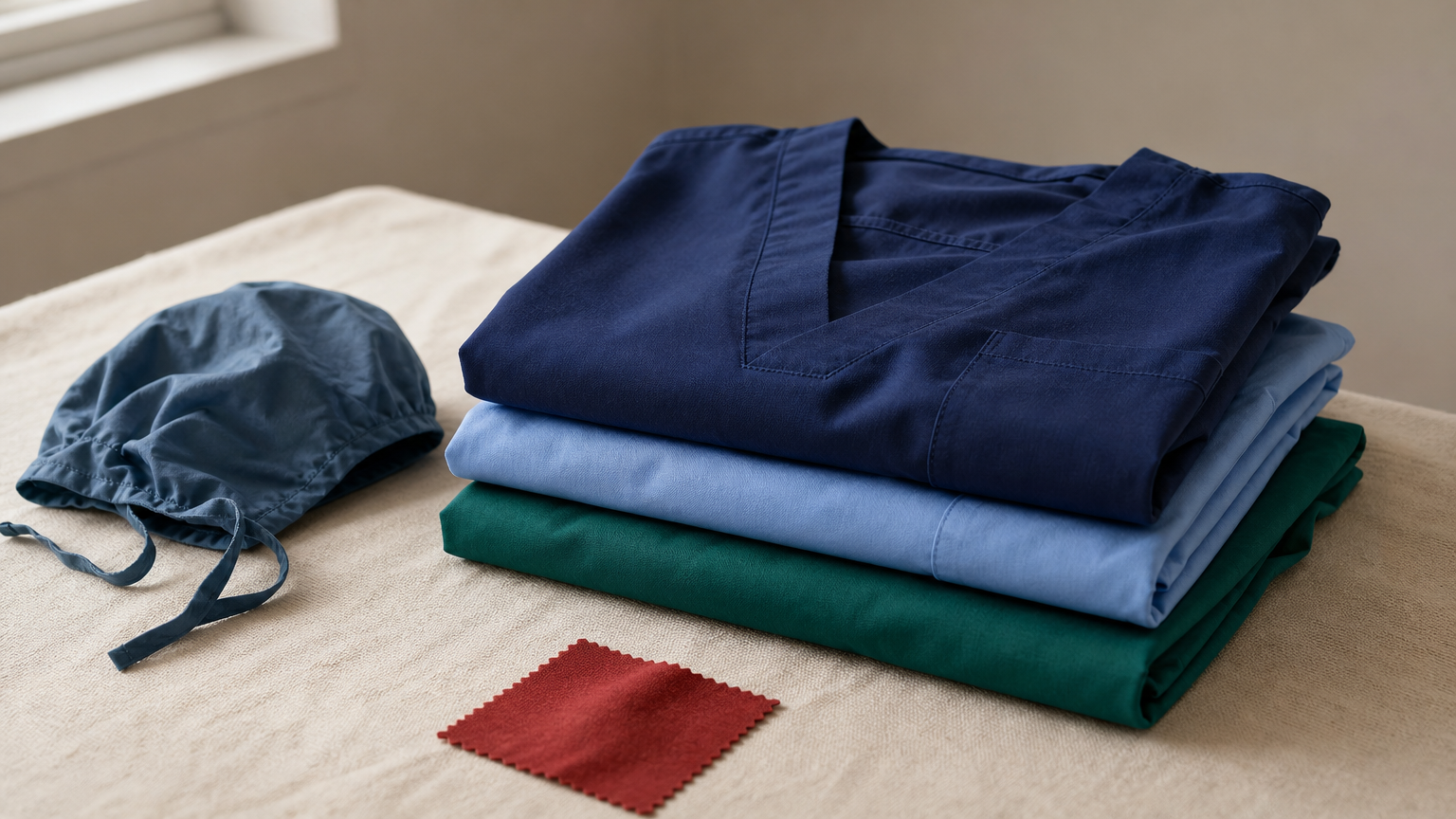
Color also changes how stains and mood play out:
- Dark shades such as navy, black, and charcoal hide everyday wear.
- Light shades such as ceil blue, white, and pink show spills, which some teams prefer.
- Blue and green read as calm. Pink, purple, and prints soften pediatric and specialty settings.
What each scrub color means
Each scrub color has a common association, but only a few are consistent across hospitals. Blue and green are the most reliable. Everything else varies by facility, so treat the table below as a pattern, not a rule.
Scrub color meanings at a glance
| Color | Commonly worn by | Typical settings |
|---|---|---|
| Navy and royal blue | Nurses, frontline care, some surgical staff | Med-surg, ICU, primary care, dental |
| Ceil (light) blue | CNAs, support staff, general-duty nurses | Patient floors, clinics, pediatrics |
| OR green, hunter, teal | Surgeons, surgical techs, anesthesia | Operating room, PACU, endoscopy |
| Burgundy, wine, red | Emergency staff, respiratory therapists, phlebotomists | ED, trauma, specialty units |
| Purple, eggplant | Oncology, women's health, care coordination | Specialty units |
| Pink and prints | Pediatric nurses, child life specialists | Pediatrics |
| Gray, charcoal, black | Administrative staff, security, technicians | Behind-the-scenes roles, private practices |
| White | Lab staff, pharmacists | Laboratories, diagnostics |
Blue is the most common color in US hospitals. It reads as calm and professional, and patients recognize it as the color of nursing. Ceil blue is the softer, friendlier version.
Why burgundy, purple, and gray vary so much
Burgundy and wine scrubs are the best example of an inconsistent meaning. Some hospitals use them for emergency departments or respiratory therapy. Others save them for nurse practitioners or specialized technicians. The shared idea is standing out from the sea of blues and greens, not one fixed job.
Purple and gray work the same way. Purple often signals compassion-focused or specialty care, but your hospital may simply use it for a department. Gray and black suggest a modern, behind-the-scenes look. Because of this spread, ask HR or your manager before you assume a shade matches a role.
Blue and green carry real meaning across hospitals. Burgundy, purple, and gray mean whatever your facility says.
How to choose colored scrubs for your role
Choose your scrub color by checking your facility's rules first, then picking a shade within them. This order keeps you from buying a set you cannot wear to work.
Start with your dress code
Follow these steps before you order:
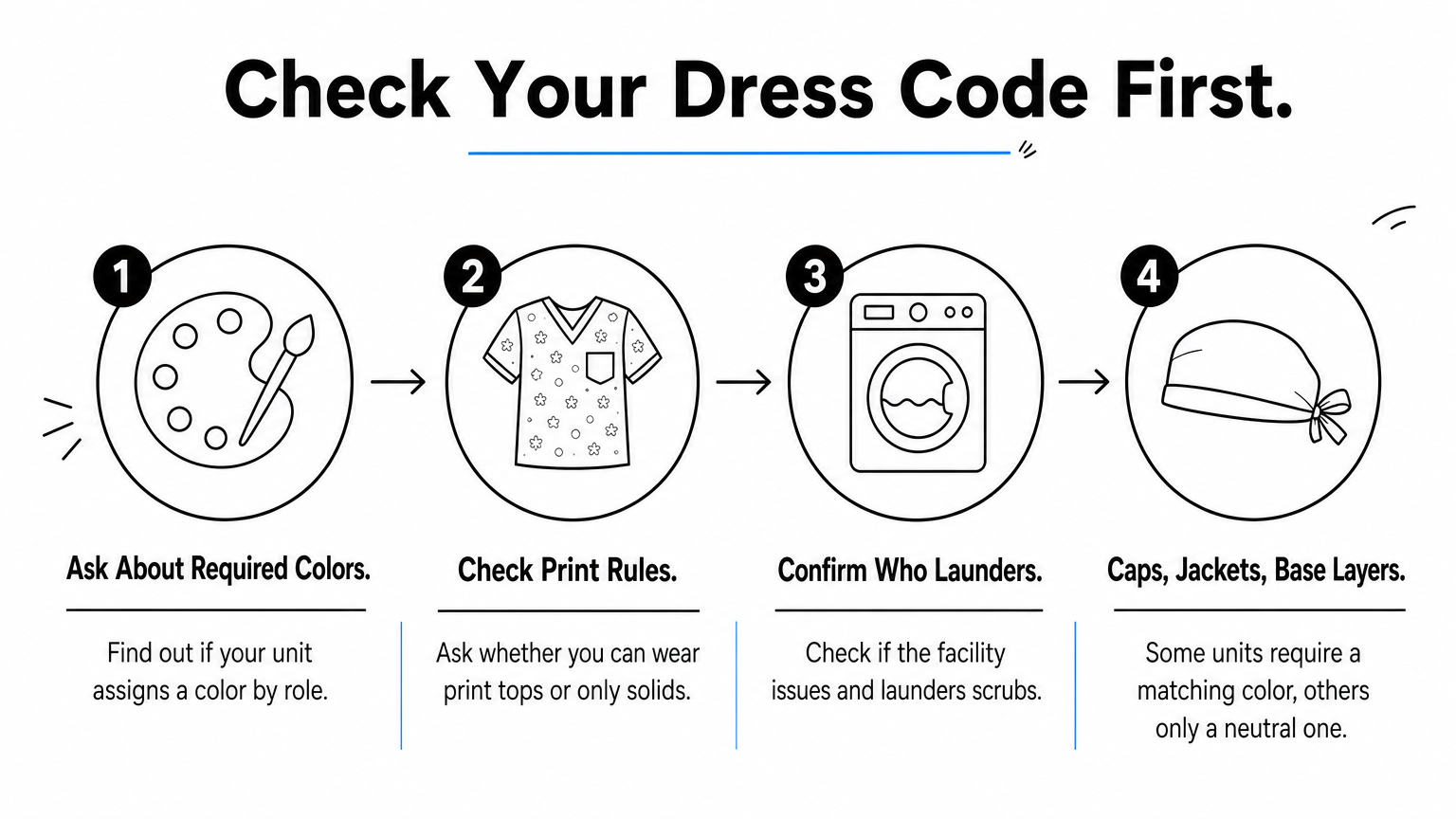
- Ask whether your unit assigns a required color by role or department.
- Ask whether you can wear print tops or only solids.
- Confirm whether the facility issues and launders scrubs. If it does, personal sets may not be allowed on the floor.
- Check the rules for caps, jackets, and base layers. Some units require a matching color, others only a neutral one.
Can you wear different colors on different days? Where there is no code, usually yes. Where there is one, no. Some facilities allow mix-and-match within an approved palette, such as navy pants with a ceil blue top.
Pick a shade when the choice is yours
When your employer lets you choose, start with navy, ceil blue, or royal blue. They are the most popular for a reason. They look professional and suit most skin tones. They also hold up to constant washing.
Then match the color to your day. Wear dark colors if you work with fluids or ink. Wear lighter colors if you want to spot spills. If you want personality inside a strict code, put it in the accessories. A printed scrub cap in a solid-color uniform is the most common workaround.
Buying colored scrubs and matching caps
Check three things before you buy colored scrubs: color consistency, fabric, and care. A cap is also the cheapest way to add or coordinate color.
What to check before you order
- Color consistency. Dye lots can differ slightly between tops and pants. Buy the set together, and order extras at the same time.
- Fabric. Stretch and non-stretch fabrics both exist. Choose by how much you move, and check the care label.
- Care. Washing cold and drying low slows fading, and deep shades such as wine and navy fade fastest.
- Returns. Monitors show color differently. Confirm the return policy before you order a bold shade.
Coordinating a scrub cap with your color
A cap is a low-cost place to try a shade. Blue Sky Scrubs scrub hats are $24.99 each. Here are examples in colors from this guide:
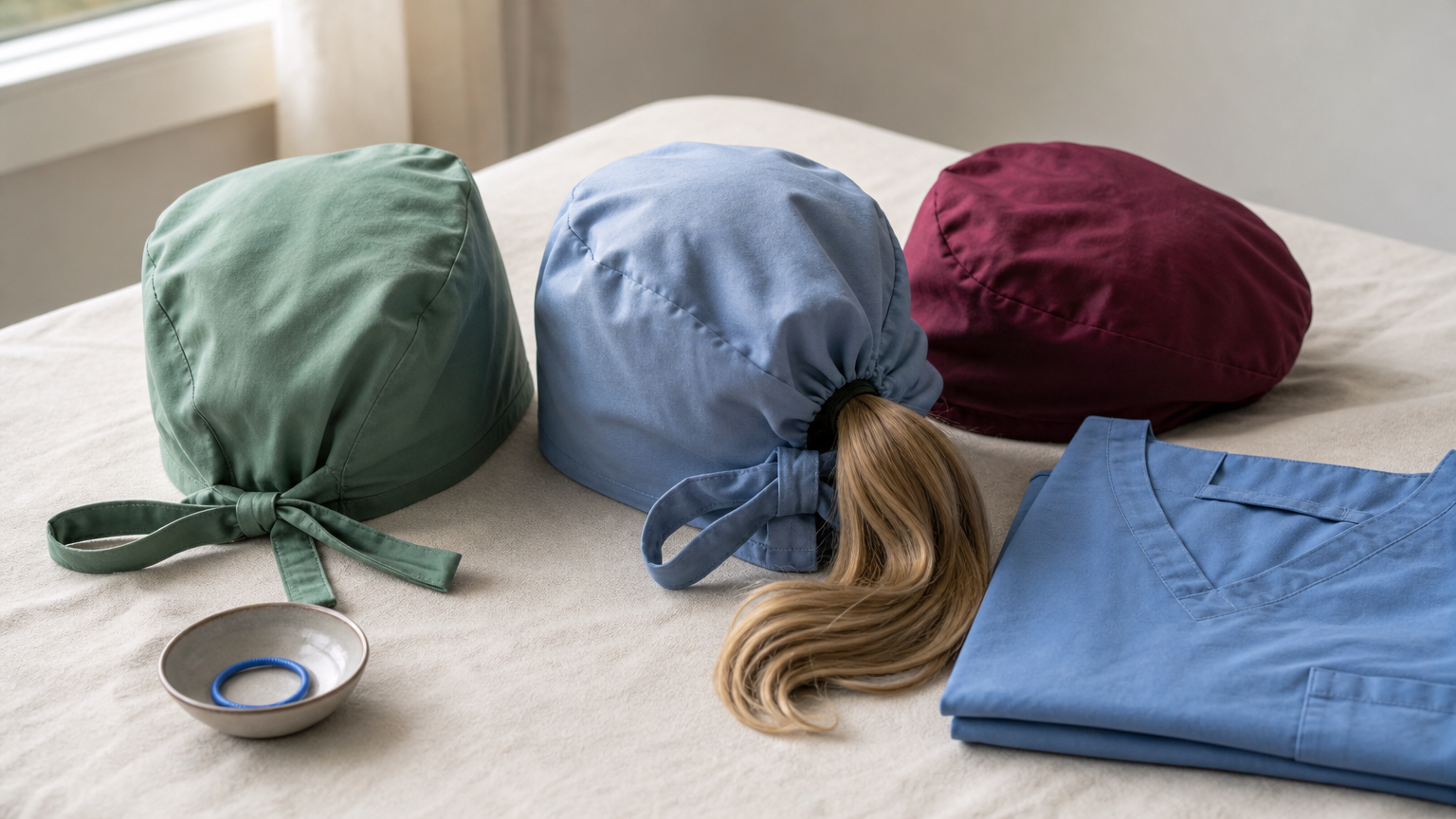
| Cap | Color | Fit |
|---|---|---|
| Solid Pony Scrub Hat | Ceil Blue, Pine Green | Designed for ponytails, with a white ribbon |
| Solid Stellar Scrub Hat | Crimson, Eggplant | Euro style, full coverage, ribbons tie under or on top |
| Men's Scrub Cap | OR Green | Classic tie-back, a surgical green worn in operating rooms for over 50 years |
| Men's Scrub Cap | Crimson Wine | Tie-back, 65% polyester and 35% cotton blend |
OR Green is also called Surgical Green or Carnegie Green, so a surgical team's green cap may be listed under any of those names.
Buy the cap in your required color first, then add a second one in a shade you like.
Pick the color, then confirm the rules
Colored scrubs communicate your role and set the tone for patients, but the code behind them belongs to your facility. Blue and green carry the clearest meaning. Burgundy, purple, and gray vary, and some hospitals simply let you choose. Check the dress code, pick a shade within it, and buy the full set together so the color matches.
When the uniform is fixed, personalize with a cap. Blue Sky Scrubs makes caps in solids and prints that pair with most scrub colors. If you want to start there, browse women's scrub hats and match one to the color you wear most.


