


Vest with Scrubs: 5 Styles Compared and How to Wear Them
The best vest with scrubs is a midweight, zip-front vest with a soft lining, at least two zippered pockets, and enough stretch to reach an overhead IV pole. Softshell works for most shifts, microfleece wins in the coldest units, and a multi-pocket utility vest suits anyone who carries a full kit.
Nurses and other clinicians wear vests because hospitals run cold and a sleeved jacket gets in the way. A vest keeps your core warm, leaves your arms free for charting, lifting and hand washing, and still looks professional when a family member walks in. The wrong one is bulky, hot after an hour, or short on pockets.
This guide ranks five vest styles by warmth, pockets, fit and price. Blue Sky Scrubs has made medical apparel for 20 years, so the first three styles use vests we sell, with real prices and sizes. The last two cover styles you will see at other retailers, so you know what to look for. Each style also shows you how to wear it.
1. Softshell vest
A softshell vest is the best all-round pick. It has a bonded outer layer and a fleece lining, so it blocks drafts from air vents and still stretches when you reach.
What it is and what it costs
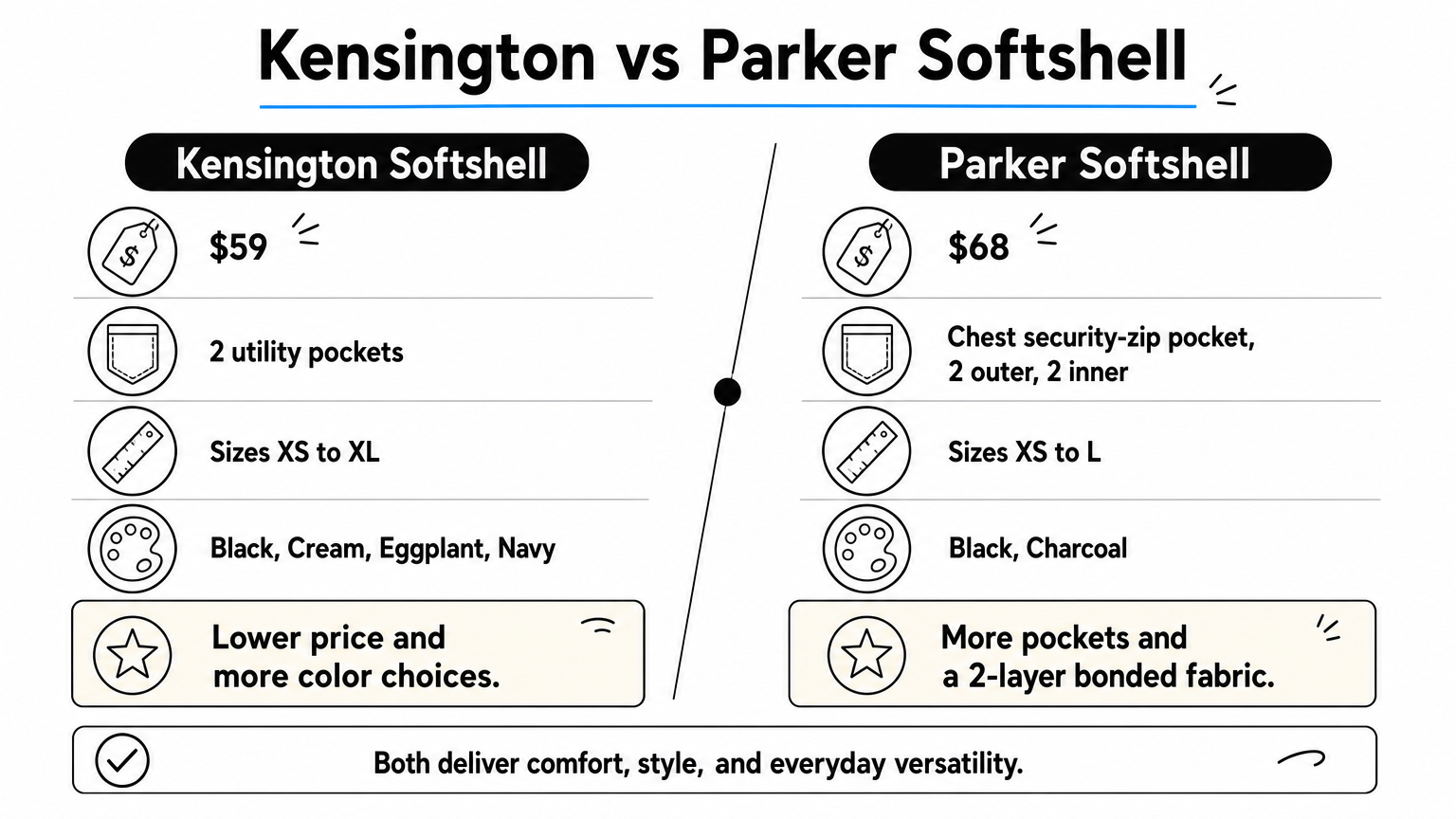
Blue Sky Scrubs sells two women's softshell vests, the Kensington at $59 and the Parker at $68. Both are fleece-lined polyester and both are listed as operating room compliant. Here is how they compare.
| Vest | Price | Fabric | Pockets | Sizes | Colors |
|---|---|---|---|---|---|
| Kensington Softshell | $59 | 100% polyester softshell, fleece-lined | 2 utility pockets | XS to XL | Black, Cream, Eggplant, Navy |
| Parker Softshell | $68 | 2-layer bonded polyester, pro fleece lining | Right chest security-zip pocket, 2 outer, 2 inner | XS to L | Black, Charcoal |
A vest pays for itself quickly. A $68 Parker worn three shifts a week for 30 cold weeks is 90 shifts of use, which works out to about 76 cents a shift.
Who it suits
Pick a softshell if you want one vest for most of the year and move between departments. The Parker is a vest version of our most popular jacket, the Bailey, so it fits if you like that cut but not the sleeves.
Can you wear a jacket with scrubs? In most workplaces, yes, and a warm-up jacket is the classic choice. A vest wins when you wash your hands often, move patients, or lift, because nothing hangs off your wrists. Still check your facility's dress code before you buy.
How to wear it
Wear it over a short-sleeve scrub top or a long-sleeve underscrub, zipped to mid-chest. A black or charcoal Parker looks sharp over brightly colored scrubs. The Kensington in Eggplant or Cream stands out against navy or black.
Check the Parker's chest chart before ordering: XS fits 30 to 34 inches, S 34 to 36, M 36 to 38 and L 38 to 40. If you layer a thermal underneath and sit between two sizes, take the larger one.
A softshell vest gives you draft protection and full arm freedom in one layer.
2. Microfleece vest
A microfleece vest is the warmest and softest option, and the right choice if you are always cold on shift.
What it is and what it costs
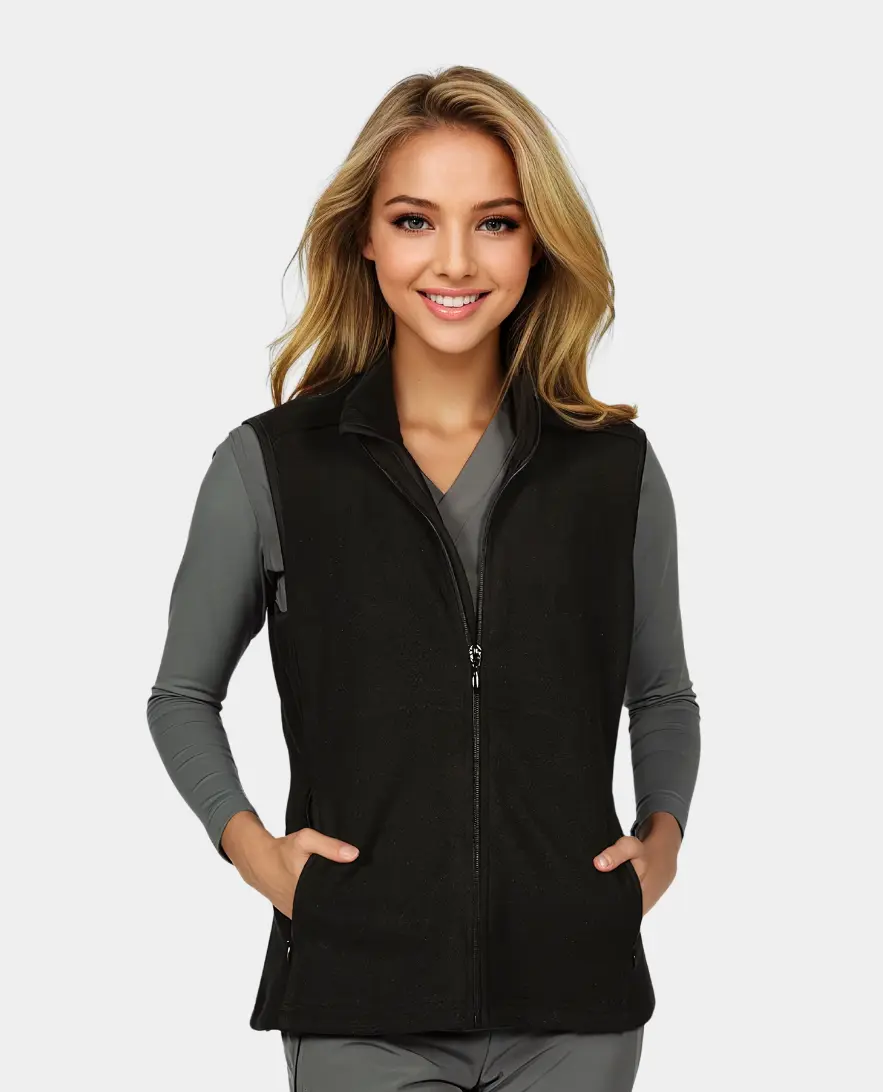
The Ashton Microfleece Vest is 100% brushed polyester microfleece. It has two zippered front pockets and a stand-up collar. It costs $68 and comes in Black, Cream and Navy, in sizes XS to XL. The fit is athletic, so it sits closer to your body than a boxy utility vest.
You trade storage for warmth here. With two pockets, it holds a phone and a pen, not a whole kit.
Who it suits
Choose microfleece if you start early, work near cold storage, or feel every vent in the building. The brushed fabric feels cozy against your arms and neck.
We do not list the Ashton as operating room compliant. If you work in the OR, check your facility's outerwear rules first, or choose a Parker or Kensington instead. For wards, clinics and offices, microfleece is hard to beat for warmth per dollar.
How to wear it
Put it over a long-sleeve scrub top or an underscrubs shirt. The stand-up collar covers your neck, so you rarely need a scarf. Cream looks fresh over navy scrubs, and Black or Navy disappears into most uniforms.
Sizes run from XS (chest 30 to 36 inches) to XL (42 to 44 inches). Because the cut is athletic, size up if you wear a thick thermal underneath. Length runs from 23 inches in XS to 27 inches in XL, so it sits at the hip.
Microfleece gives you the most warmth, but you give up pockets and OR approval.
3. Stretch midweight vest
A stretch midweight vest is the pick for men, or anyone who wants a longer cut and the most freedom of movement.
What it is and what it costs
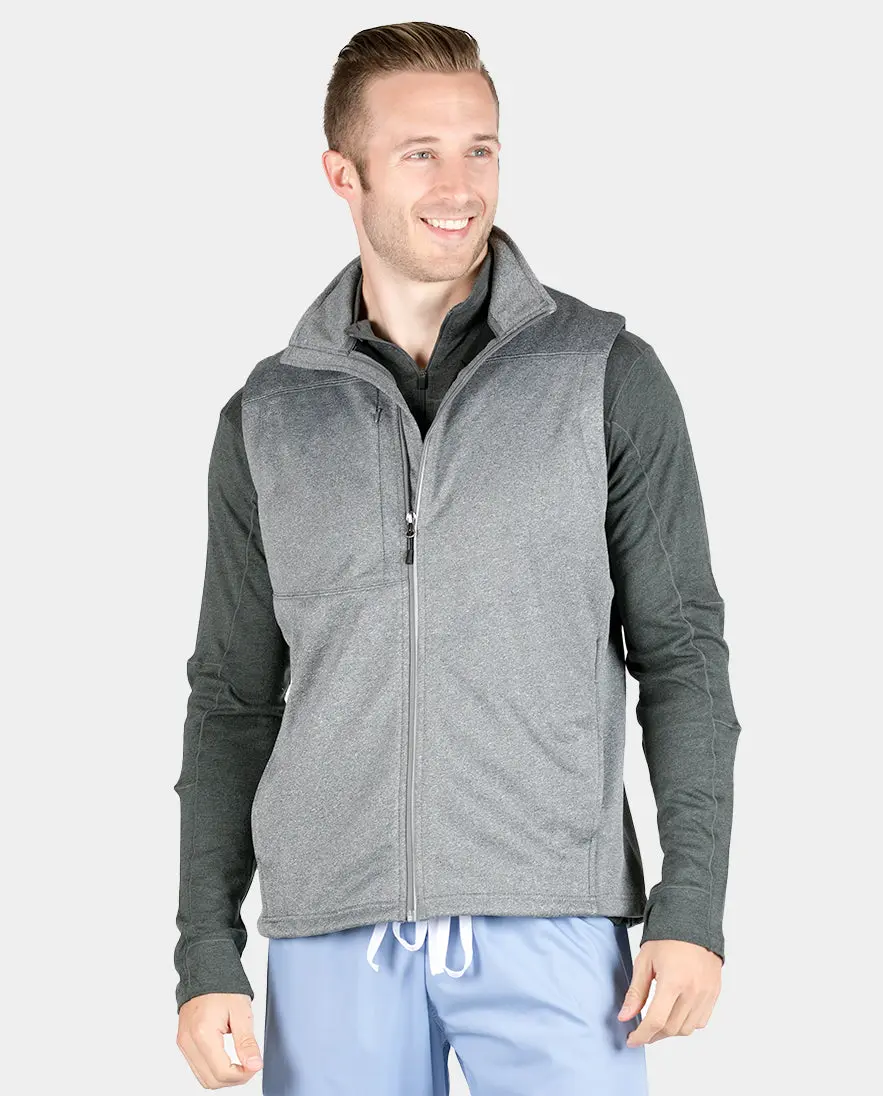
The Highland Stretch Vest is a men's vest at $68 in Black or Charcoal, sizes S to XL. It is a super-stretchy, midweight layer with a right chest pocket with a security zipper and two bottom pockets. The full front zipper is reflective, and the vest is listed as operating room compliant.
Who it suits
This vest suits men who want warmth without restricted shoulders, and anyone taller or longer in the torso. It runs 27.5 to 30.5 inches long, against 23 to 26 inches for the Parker, so it covers your waist when you bend.
It also suits people who move between the unit and outdoors. The reflective zipper helps drivers see you in a dark parking lot at the end of a night shift.
How to wear it
Pair it with a long-sleeve tee or a standard scrub top. Charcoal looks good over black scrubs, and Black works with everything. Use this chart to pick your size.
| Size | Chest (inches) | Length (inches) |
|---|---|---|
| S | 34 to 38 | 27.5 |
| M | 38 to 40 | 28.5 |
| L | 41 to 45 | 29.5 |
| XL | 45 to 48 | 30.5 |
The ranges leave little overlap, so measure your chest over the shirt you plan to layer under it. Keep the chest pocket for your badge or phone and the bottom pockets for lighter items.
The Highland's length and stretch make it the vest to buy if shoulders and torso length matter most.
4. Quilted or puffer vest
A quilted or puffer vest is the lightest warm layer for commutes, clinics and cold break rooms, though it is the bulkiest of the five on the body.
What it is and what it costs
Quilted and puffer vests use stitched, insulated panels to hold heat. Scrub brands price them at roughly $37 to $61, depending on the pocket count and any sale. Blue Sky Scrubs does not sell this style, so use the checklist below when you shop elsewhere.
- Zippered pockets, not open slots
- A stretch panel at the side or back
- A machine-wash care label
- A water-resistant finish only if the product details say so
Who it suits
Choose this style if you commute in cold weather, work in outpatient clinics, or sit often in a chilly office. It also suits you if you want a more casual, outdoorsy look over scrubs.
Skip it if you wear a lab coat all day or work in the OR. The puffed panels add bulk under a coat, and facility rules on outerwear can be strict.
How to wear it
Pick a hip-length or cropped cut. A cropped vest does not bunch when you sit to chart. Wear it over a fitted long-sleeve top and keep the color dark and neutral, such as black, navy or pewter, so it looks professional.
Take it off in the warm parts of your shift. Puffer panels trap heat, and overheating makes you tired faster.
Quilted vests give the most warmth for the weight, but bulk is the cost.
5. Multi-pocket utility vest
A multi-pocket utility vest is for people who carry their tools on their body. It trades a sleek look for storage.
What it is and what it costs
Utility vests usually have six or seven pockets and are made from bonded fleece or sherpa-lined fabric. At other retailers they commonly cost $45 to $60. If you want storage without the bulk, the Parker is a close match from Blue Sky, with a security-zip chest pocket plus two outer and two inner pockets for $68.
Who it suits
Nurses, techs, paramedics and aides who carry scissors, penlights, pens, alcohol wipes and a phone will use every pocket. It also suits people who hate wearing a cross-body bag or fanny pack on shift.
Check how the pockets are built. You want a security-zip chest pocket for your phone or badge, plus interior pockets for small items that should stay out of sight.
How to wear it
Put heavy items in the lower pockets and light ones near your chest, so the vest hangs straight. Overloaded pockets pull the shoulders down and make the zipper line sag.
Wear a fitted top underneath, because a boxy vest over a loose top looks sloppy. Stay with solid colors, and zip the vest only to mid-chest so you can still reach your stethoscope.
Count the pockets you will actually use, then buy the vest that holds exactly that.
Pick the vest that fits your shift
For most people, a fleece-lined softshell is the safest choice. Go to microfleece if the unit is freezing, a longer stretch vest if you are tall or male and need full range of movement, a quilted vest for commuting, and a utility vest if you carry a lot. Whichever you choose, check your facility's dress code, then measure your chest and buy the size that fits over your layers.
When you have settled the vest, finish the outfit with Blue Sky Scrubs' women's scrub hats, which come in bouffant, ponytail, pixie and tie-back styles. Our men's scrub caps and vests are on the site too.


